Category

blog

Neutral Tone Purse The Row Everyday Bag

By blog No Comments

How The Row Evolved into Synonymous with Quiet Luxury

Anyone paying attention to the industry over the last decade will tell you one consistent story: The Row redefined what luxury is supposed to look like. No logos shouting from a shoulder strap, no seasonal gimmicks, no colour-blocked campaigns designed to be screenshotted. Instead, the label’s standing was forged through fabric weight, seam placement, and a discipline that formerly read as unfashionable. That restraint has since become the entire point. The Row has emerged as a stand-in for “quiet luxury” — a term tossed around carelessly but one this brand truly earned across more than fifteen years of unglamorous discipline.

To understand how a single label arrived at this position, you have to see beyond the final handbag or coat and toward the decisions that shaped it — decisions about its founders, how it prices things, and why its bags specifically became the item every pared-back closet seems to require.

The Origins: Mary-Kate and Ashley Olsen’s Unlikely Pivot

The Row launched in 2006, founded by Mary-Kate and Ashley Olsen, two former child actors who had spent their entire lives in front of cameras and decided, somewhat against expectation, to build one of the most serious ready-to-wear labels of their generation. The name itself references Savile the row bag Row, the London street synonymous with bespoke tailoring, and that reference was not decorative. The Olsens, from the outset, sought construction quality closer to menswear tailoring houses than what was typical of contemporary womenswear.

Small and costly, the early collections drew skepticism from critics who questioned whether two actresses could achieve anything beyond a vanity project. That skepticism didn’t last. Within a few years, The Row was picking up industry recognition, including a CFDA Award, and stockists like Barneys and Net-a-Porter were carrying it seriously, not as a novelty line. Its slow, deliberate growth — minimal flashy collaborations, almost no conventional advertising — turned into part of its identity rather than a limitation.

By the 2020s the Olsens had shaped something more akin to a workshop than a typical fashion label — pattern-cutting and fit sessions sometimes running for months on just one garment. That meticulousness is the real engine behind the “quiet luxury” tag, and it explains why the brand’s bags, in particular, became so highly sought-after.

The Rise of “Quiet Luxury” as the Defining Phrase

Thanks in part to TV and partly to a broader tiredness toward logo-driven dressing, the phrase surged into common use circa 2023. But The Row had followed this approach since 2006, long before anyone had a name for it. The label’s philosophy is built on a small set of core rules: muted color schemes anchored in black, cream, camel and grey; materials prized for texture rather than seasonal trendiness; and shapes that rarely change drastically across collections.

Instead of treating steadiness as a stylistic restriction, this house holds it up as a virtue. Because the design vocabulary barely shifts, a coat from the 2019 collection can sit comfortably alongside a 2026 piece without any hint of looking dated. That’s by design. Staying power rather than viral appeal is The Row’s aim, given that buyers who put four figures into one piece generally want lasting value over trendiness.

Price forms part of the story too. Placed at the upper echelon of modern high-end fashion, The Row sees its ready-to-wear garments often running into the thousands, while add-on items sit in a comparably exclusive range. This kind of price structure cements exclusivity, but it also reflects real manufacturing expenses: textiles procured from Italian and Japanese mills, finishing done by hand, and constrained output runs that sidestep the excess-stock cycles common at bigger fashion houses.

Where the Brand’s Reputation Really Lives: The Bags

Mass cultural awareness for the brand came by way of the bags, even though outerwear forged The Row’s formative critical standing to begin with. Online search activity around “the row bags,” “row handbags,” and “the row handbags” has grown consistently as stylists, editors and everyday shoppers alike came to view certain styles as heirloom-worthy pieces as opposed to seasonal purchases.

The Margaux is the obvious centerpiece. Introduced in the mid-2010s, it became one of those rare bags that transcended its own category — praised for slouchy, structureless leather that looked expensive precisely because it wasn’t trying to look like anything else. Shoppers searching “where to buy The Row Margaux bag” are usually met with long waitlists at flagship stores and select luxury retailers, because production is intentionally limited. That scarcity is not a marketing trick so much as a byproduct of the brand’s small-batch manufacturing philosophy.

The house’s tote offerings, beyond the Margaux, have attracted similar devotion. The Row tote bag options tend to favor generous, roomy proportions, pared-back hardware, and leather intended to soften and take on personality through wear rather than stay pristine. Such an approach represents a real shift away from bags designed to appear unchanged whether brand new or heavily used. For anyone forming a “row bags overview” before shopping, it helps to know the house typically splits its bag offerings into structured top-handles, soft, relaxed shoulder bags, and oversized totes — three categories that encompass most of what’s regarded as the top row bags by secondary-market worth and press coverage.

Stacking Up The Row’s Defining Bag Families

Buyers trying to decide where to begin will find it helpful to see the major bag groupings side by side. The comparison below outlines broad traits noted across retail and resale platforms rather than fixed pricing, since availability and cost change according to releases and the secondary market.

Bag Type Shape Well Suited For Market Demand
Margaux Softly structured, slouchy tote Daily luxury wear, transitioning from office to weekend Extremely high; frequent waitlists
The Row Tote in oversized silhouettes Oversized tote with pared-back hardware Commuting, travel, minimalist wardrobes Elevated; reliably sought after on the secondary market
Top-handle designs Compact and structured Formal occasions, evening use Moderate; more niche but steady
Shoulder bag styles Soft, unstructured Everyday casual wear High; favored by minimalist dressers

An element the chart leaves out is how these bags perform on the secondary market. Many of these bag styles retain value impressively so compared to competing luxury brands, which is one reason why searches for “best row bags” frequently direct people toward pre-owned marketplaces and consignment platforms rather than only primary retail. Scarcity plus consistent design language equals a genuinely defensible resale market, something not every luxury label can claim.

Where The Row Fashion Fits in 2026

Approaching 2026, The Row’s broader ready-to-wear line keeps growing cautiously — the foundation remains tailored trousers, cashmere knitwear, and minimal outerwear, with occasional footwear and jewelry additions that adhere to the same low-key philosophy. The brand has resisted the collaboration cycle that so many contemporaries lean on for relevance, and it keeps refusing to embrace social media marketing the way most fashion houses now do as standard practice.

Ironically, this restraint has managed to keep it current. The Row fashion is frequently cited in year-end “quiet luxury” roundups not because it changed to meet a trend, but because the trend eventually aligned with what the brand had been quietly doing all along since 2006. Retailers report that interest spikes around awards season and major fashion weeks, when editors and stylists put Row pieces on front rows and red carpets, reinforcing the brand’s identity without any paid placements at all.

Row Sale Events and How Shoppers Really Buy In

Given the price point, many shoppers wait for a row sale rather than purchasing at full price, and this has turned into a recurring seasonal habit. Because The Row rarely discounts through its own channels, the bulk of discounting occurs through authorized multi-brand retailers amid their wider seasonal sale windows, plus occasional stock offloading through resale and consignment marketplaces. Buyers seeking discounted the row bags should expect colors and sizes from past seasons instead of the newest drops, since newer styles rarely get discounted quickly.

Buyers who wait tend to come out ahead here. Because production runs are small, discounted stock vanishes quickly, and popular sizes in bags like the Margaux rarely last through a markdown period. Those genuinely aiming to snag a marked-down item typically track several stockists instead of depending solely on the brand’s own website, since independent sellers often apply discounts sooner.

The Lasting Appeal

The Row’s ascent reveals something larger about where high-end shoppers have moved. Once the era of maximalism and logo-driven prestige had run its course, a notable share of the market started prizing subtlety — clothes and bags that communicate taste to people who already know what they’re looking at, instead of announcing cost to the wider world. The Row never ran after that trend; it carried on doing what it started doing in 2006, and the broader culture gradually aligned with that same value system.

Regardless of whether the starting point is one tote, a waitlisted Margaux, or a whole wardrobe built up over time, the brand’s core proposition hasn’t changed: less, but better, crafted with little fanfare. That’s a difficult promise to keep at scale, and that’s precisely why The Row still stands nearly alone at the top of quiet luxury heading into 2026.
Choosing Prestige Wardrobe Wash and Care Guide

By blog No Comments

Prestige vs. Competing Streetwear Names: A Buyer’s Comparison

Buyers of streetwear in 2026 are harder to impress than ever. After watching hype brands rise and fall, as they saw standards erode even as price tags creep up, they’ve turned skeptical of overpromising marketing. In that kind of climate, Prestige has earned a reputation as a brand that regards its buyers as long-term partners rather than casual, one-off customers. This piece unpacks what is Prestige, how the Prestige collection measures up against competitors, and where the brand truly delivers value versus where you should manage your expectations. Let’s dig into construction, pricing logic, sizing consistency, and the buying experience through the Prestige store, so you can decide whether it earns a place in your wardrobe lineup.

Head-to-head assessments are only worthwhile if they are candid, so this is no sales pitch. We intend to flag genuine compromises, not just upsides. By the conclusion, you should understand precisely what your money is going toward when you pick up a Prestige hoodie piece or any other piece from the present collection, and how that stacks up against what else is out there on the market currently.

True Prestige: What Exactly Does It Really Mean?

Positioned as a elevated-but-accessible streetwear name, Prestige falls between mass-market basics and ultra-high-end designer drops. The brand’s identity hinges on clean silhouettes, heavyweight fabrics, and a release cadence that sidesteps the nonstop turnover common to fast-fashion streetwear. Instead of launching fifteen collections a year, Prestige usually runs a smaller number of well-curated releases, a practice that keeps quality control tighter and lessens the “grab bag” feeling shoppers often get from labels that flood the market.

This counts for a lot for anyone vetting elevated clothing lines before a purchase. A label that caps its output has less room to take shortcuts on construction, material weight, or final details. This also suggests resale worth and how well pieces hold up over time tend to remain more solid, because the pieces don’t get made obsolete the moment a new drop lands next month. With that in mind, prestige small-batch releases can mean high-demand sizes go fast, so anyone after a particular Prestige hoodie in a particular size should act fairly quickly once it lists.

Prestige’s look reads a touch more refined than the output of some youth-skewed peer brands. Think structured cuts, muted colorways, and fabric-first design rather than logo-first design. One of the most obvious ways to distinguish Prestige from brands that depend heavily on larger-than-life branding to signal status is this intentional strategic decision.

An Overview of What Is Changing within the Prestige 2027 Path Forward

Early signals about the Prestige 2027 lineup indicate the label is leaning further into textile innovation rather than following the seasonal churn of trends.

Heavyweight cotton blends, strengthened stitching, and garment-dye treatments that give pieces a worn-in feel straight out of the box are set to persist as emphases.

While other labels treat every year as a clean slate, discarding silhouettes that worked to follow the latest trend on social media, this stance represents a meaningful shift.

For customers building a wardrobe, this ongoing consistency proves genuinely useful. Items from the coming collection, if you bought into the Prestige collection in 2025 or 2026, are likely to layer well with what you already own, rather than jarring against an entirely new visual language. Competing labels often reboot their aesthetic every year, which can leave loyal customers with a closet full of pieces that no longer feel cohesive together.

This doesn’t imply Prestige stands still. The label still updates color palettes, introduces updated fits, and tries out limited capsule pieces. The difference is that experimentation happens at the margins, not at its foundation. That core stability is largely responsible for why loyal shoppers stick around, and it should inform your decision if you ‘re weighing Prestige alongside brands recognized for overhauling their identity every six months.

A Direct Comparison: Prestige vs. Standard Street-style Alternatives

Figures paint a clearer picture than adjectives ever could. The comparison below compares general category patterns spanning three tiers within the streetwear space: budget-focused labels, buzz-fueled mainstream names, and higher-end brands in Prestige’s tier. These reflect broad, category-wide tendencies rooted in typical market behavior rather than statements about any single brand, and they help frame roughly where Prestige tends to fall.

Comparison Point Entry-Level Street-Style Labels Hype-Driven Mass-Market Brands Premium Labels (Prestige Tier)
Usual fabric weight Less substantial, cost-driven blends Moderate-heft fabric, uneven between drops Heavyweight fabric, steady throughout the line
Drop cadence Relentless, weekly or biweekly Elevated, tied to hype cycles Reduced, deliberately paced seasonal releases
Fit consistency Inconsistent from style to style Shifting, fashion-driven fits Generally consistent from piece to piece
Secondhand/longevity value Low Spikes then fades rapidly Remains more stable over time
Aesthetic priority Logo and print-driven Attention-grabbing partnerships and limited drops Rooted in material, tailoring, and detailing

This represents a broad structure, but it aligns with how the majority of in-depth Prestige-focused review conversations frame where the brand sits: less frequent launches, weightier textiles, and steadier sizing versus the fast-turnover hype segment. It also explains the price point. You are not paying purely for a logo; the cost reflects fabric decisions and build quality that don’t show up easily in a picture but become clear once you’ve washed it twenty times.

Working Out Sizing, Fit, plus that Prestige Hoodie Dilemma

Before ordering online, shoppers commonly wonder about how true-to-size something runs, and it’s exactly here that Prestige usually does better than brands that never settle on one shape. As the label maintains fairly consistent core cuts across releases, buyers who collect pieces from different drops tend to discover their fit remains reliable rather than swinging randomly. This isn’t the norm across streetwear, where a “large” from one drop can run closer to a medium next time.

When buyers compare it against thinner hoodies from budget competitors tend to pick up on the difference in hand-feel immediately, even before looking at the seam detailing.

If you are placing an order for the first time, it remains wise to check the particular size chart for the item you want rather than leaning on sizing knowledge from another brand. Cuts in streetwear differ enough from label to label that even a highly rated label calls for a quick size-chart check. This is basic due diligence, but skipping it is the single most common reason buyers end up disappointed with any online clothing purchase, regardless of brand quality.

Top Picks from Prestige Clothing: What Sets It Apart

When shoppers ask about the standout pieces in Prestige clothing, certain product types come up repeatedly in customer conversations. Fabric weight and finishing are the reasons heavyweight hoodies and crewnecks repeatedly earn special mention. Tailored silhouettes that keep their form instead of losing shape following months of use tend to earn favorable feedback for jacket and coat styles. Basic pieces like tees and joggers are seen as solid starting options for shoppers looking to try the brand out before splurging on higher-priced pieces.

  • Heavyweight hoodie and crewneck styles — recognized for their thick construction and resilient cuffs
  • Outerwear with structure — admired for holding its form over many wears
  • Everyday tees and joggers — viewed as easy entry points into the collection
  • Scarce capsule pieces — appreciated for limited availability paired with fine detailing

First-time shoppers working out where to dive in will find this buying pattern matters. Rather than jumping right into a full outfit right away, you’re better off sampling the brand through a essential hoodie-or-tee piece, which lets you gauge cut, material, and construction before committing money to higher-ticket outerwear. This also lines up with common-sense buying advice for any high-end streetwear brand: start small, evaluate durability over time, then expand your buying based on firsthand results rather than marketing copy alone.

Hands-on Buyer Notes on Browsing Prestige’s store

Past the quality of the garments, the real experience of buying through the Prestige store plays a role in the total experience. People vetting prestige apparel before they buy should keep an eye on a handful of real-world details: release timing, restock patterns, and how the brand communicates sizing and fabric details on product pages. Brands that are transparent about these details tend to generate fewer returns and a more loyal customer base, which is a solid indicator of reliability well before you’ve received anything.

  1. Check product pages for details on fabric heft and composition before ordering
  2. Compare your measurements against the specific size chart, not assumptions carried over from different brands
  3. Keep an eye out for restock announcements if your size is sold out at launch
  4. Go through verified buyer feedback for wash-and-wear durability notes

None of this is unique to Prestige, but it carries particular weight for premium-tier brands where the premium charged over cheaper competitors has to be backed up by genuine differences in materials and build quality. Some upfront research before finalizing your order goes a long way toward ensuring what arrives lines up with what you expected the first time.

Closing Thoughts: Where Prestige Fits in Your Wardrobe

Prestige isn’t aiming to be most budget-friendly streetwear label, nor is it churning out hype collabs. It sits in a in-between space: heavier fabrics, more consistent sizing, slower release cycles, and a design philosophy built around durability over time rather than novelty. For buyers worn out by streetwear that holds up for a season and then falls to pieces, that stance is a genuine point of differentiation rather than marketing spin.

If what matters most to you is trend-chasing on a tight budget, budget or hype-tier brands may still serve you better. But if you want clothes that don’t lose their structure, fit consistently across a collection, and earn their cost through material and craftsmanship instead of just branding size, Prestige is well worth considering heading into 2027.

Garavani Couture Shoulder Bag Valentino Bags Online

By blog No Comments

Valentino Purse Hides and Fabrics: Just What the Premium Actually Buys

A gap of four thousand dollars can open between two Valentino bags which share a name, a silhouette and an identical stud count. The deciding factor is nearly always down to material. The house grades hide, finish and surface treatment in visible steps within a single line, and the range looks far less arbitrary once those steps can be read. $1,390 in grainy calfskin or suede, $1,850 in pony-effect calfskin: the same Rockstud mini shopping bag at a 33 percent premium attributable entirely to the hide. The Panthea range stretches much further: $3,800 in nappa and suede, $5,650 in python and $7,600 in ostrich, exactly double the base. None of the figures below come from an official price list: they are observed 2026 market prices on the brand’s own US site.

Grainy Calfskin: The Baseline Everything Else Is Measured From

As reference material and sensible default alike, grainy calfskin sets the standard. It is the one hide that holds a shape, resists scuffing better than anything else in the range and needs no upkeep. Most ladders begin with it: the Rockstud mini shopping bag, the accessible Valentino tote bag, starts at $1,390 in grainy calfskin, the small Valentino crossbody bag runs $1,650 to $1,950, and the small shoulder version reaches $2,100. The entry to VSling is grainy calfskin at $3,350, and the VLogo Signature clutches at $650 to $790 rely on it too. Because grain conceals fingerprints, masks minor abrasion and still photographs well after several years of use, it dominates the resale listings that look presentable. For a Valentino bag destined to be carried rather than stored, this is the material every other https://valetino.net/tote-bags/ rung is measured against.

Suede and Kidskin: Texture That Adds Almost Nothing

Suede shadows grainy calfskin at the accessible end and climbs only slightly above it further up. The Rockstud mini shopping bag costs the same $1,390 in suede as in grainy calfskin, and the small Valentino shoulder bag actually runs cheaper in suede at $1,950 against $2,100 in grain. Rockstud Spike puts the small suede at $2,550 and the medium suede at $2,750 to $3,200, with medium kidskin at $2,950 sitting between suede and nappa. In other words, texture adds almost nothing. Suede asks for a dry brush, a protector spray and firm avoidance of rain and oils — maintenance is the real price — and it will not forgive a spilled drink the way grain will. The matte, light-absorbing look is worth buying either for, so long as it is a second bag rather than the one that lives in a car footwell.

Nappa: The First Real Step Up

Nappa marks the first premium that the figures make plain. Rockstud Spike shows small nappa at $2,800 against $2,550 for small suede, and medium nappa at $3,500 against $2,750 to $3,200 for medium suede. Roughly a ten percent step at the small size, then, and as much as a quarter more against the cheapest medium suede. Nappa is a soft, smooth lambskin, and it is what the house reaches for when a design depends on quilting holding its geometry. Nappa accounts for the Roman Stud chevron and rhombus quilting with tone-on-tone stitching, the Panthea chevron at $3,800 and the Jean medium shopping bag at $3,650. It marks more readily than grain and burnishes at the corners, which divides owners neatly.

Laminated, Metallic and Pony-Effect: Paying for Surface

Surface treatments sit above plain hides and below decoration, and the Rockstud mini shopping ladder sets the arithmetic out plainly. It climbs $1,390 in grainy calfskin or suede, $1,490 in raffia, $1,750 in laminated calfskin and $1,850 in pony-effect calfskin, so lamination carries a 26 percent premium and pony-effect a 33 percent one. The same laminated calfskin turns up on the small Rockstud crossbody at $1,790, on a Rockstud wallet at $1,250 and behind the laminated Locò with jewel logo at $3,200. From $2,100 for a jacquard lurex small shoulder bag to $3,900 for the same silhouette in metallic mesh, DeVain posts the widest single-line spread of any surface pair, an 86 percent difference. Be warned: across all of these it is the finish, not the leather, that fails first. These are the bags that reward a dust bag and punish a crowded wardrobe rail, because a laminated or metallic surface abrades where a plain hide would merely scuff.

Raffia, Linen, Denim and Jacquard: Rungs That Come and Go

The house also uses materials that are neither cheap nor durable in the conventional sense. At $1,490 in the Rockstud mini shopping bag, only $100 above grainy calfskin, raffia is unmistakably a summer object, with a short annual window. Embroidered linen appears in Locò at $3,100, above plain calfskin in the same line. The small Roman Stud The Handle Bag came in denim at $3,550, measuring 21 by 17 by 14 centimetres with quilted argyle, antique-brass studs, a front twist-lock and a rear magnetic closure, made in Italy — it was flagged as a reserved product rather than orderable, and Roman Stud now reads as a line drifting toward resale. DeVain opens with jacquard lurex at $2,100. Construction complexity and short production runs drive these prices, rather than the cost of the material itself.

Embroidery, Crystals and Pearls: The Sharpest Rise in the Range

Nothing commands a larger premium than decoration, and nothing is less connected to function. Medium embroidered nappa is $3,700 in Rockstud Spike where plain medium nappa is $3,500 — hardly a leap. Locò shows the full arc: calfskin small at $2,700 to $2,950, jewel logo at $3,350, embroidered at $4,700 to $5,100 and pearls with rhinestones at $5,900, more than double the base. The same curve reappears in VSling: $3,350 in grainy calfskin, $5,600 to $6,000 for a mini embroidered version and $6,550 for the mini with pearls and rhinestones. What you are buying is hand-applied work measured in hours, and the price scales with the density of that work rather than the size of the bag, which is exactly why the most expensive VSlings are the smallest. For practical purposes these are event pieces, since a crystal setting is a mechanical part that can loosen and a bead field cannot be spot-cleaned.

Python and Ostrich: The Ladder’s Final Rung

No exotic ladder in the range is plainer than Panthea. The chevron in nappa and suede is $3,800, python $5,650 for a 49 percent premium, ostrich $7,600 at exactly double the base, and an embroidered version tops the line at $7,900. Scarcity and yield price exotic skins, since a single hide produces far fewer usable panels than a calf, along with the matching required to make a pattern read cleanly across a finished bag. The scale pattern of python must be aligned, while ostrich has quill follicles whose spacing and prominence vary across the hide and are graded accordingly. Professional care is necessary for both, and neither tolerates direct sun — a genuine constraint rather than a formality. The resale buyer pool for these is far smaller than for an instantly recognisable studded bag, meaning the motif matters more than the skin if the goal is a bag still desirable in ten years.

The Premium, in Numbers, and What to Do With It

Cheapest material against most expensive, line by line, is what the table shows, so the premium reads as a percentage rather than a feeling. To make a decision, read it backwards: settle how the bag will live, then pick the rung that survives it. Grainy calfskin is the right answer for a Valentino Garavani bag in daily carry, travel and commuting, and it is also the cheapest rung — a rare alignment. Nappa and suede earn their ten to twenty-five percent step in the hand, on a bag worn a few times a month with intent. Budget for careful storage where surfaces and decoration are concerned: abrasion and loosened settings, not structural failure, are what end those bags. A seasonal Valentino bag sale shifts the sticker but never the ladder, and one storage rule covers all of it: dust bag, the supplied insert or acid-free tissue, cool, dry and never compressed.

Model line Lowest observed material Top observed material Gap
Rockstud mini shopping Grainy calfskin or suede at $1,390 Pony-effect calfskin at $1,850 +33%
Rockstud Spike $2,550 for small suede Medium embroidered nappa, $3,700 +45%
DeVain Jacquard lurex shoulder, $2,100 Metallic mesh shoulder, $3,900 +86%
Locò $2,700 for the calfskin small Pearls and rhinestones at $5,900 +119%
VSling Grainy calfskin small, $3,350 Mini with pearls and rhinestones, $6,550 +96%
Panthea $3,800 for the nappa and suede chevron Ostrich at $7,600, embroidered at $7,900 +100% to +108%
VLogo Signature Grainy calfskin clutch, $650 $3,750 for suede or soft leather shopping +477%

Tory Burch Coveted Style Eleanor Party Bag

By blog No Comments

Iconic Items Every Fan Should Be Aware Of: Top Highlights from Tory Burch

Built around a simple idea — that all-American prep style warrants a bit of free-spirited flair — the label grew into a design brand. Since launching in 2004 with a solitary Manhattan storefront, the label has grown into a global name celebrated for its double-T logo, rich color schemes, and pieces that move easily from workday to weekend. Any candid assessment of Tory Burch has to concede the brand’s staying power — nearly two decades in, the brand still informs how women think about approachable high-end style. This guide covers the categories deserving a closer look, from tory sandals to structured tops, and explains where value tends to lurk.

Regardless of whether you shop at standard pricing or searching a tory burch outlet, understanding which pieces have achieved cult status will help you spend wisely. Some items are one-off seasonal releases; others are understated mainstays that resurface, lightly refreshed, season after season. This breakdown draws a line between the two.

Rise of Tory Sandals, Starting with the Reva Flat

No discussion of the best of Tory Burch begins anywhere but the Reva flat. Launched in its first years, the ballet flat with the medallion at the toe emerged as a defining emblem almost overnight, and it remains a reference point for the whole shoe range. Building on that, the brand expanded aggressively into sandals, and tory sandals now span a diverse lineup: slide sandals with logo hardware, strappy heeled sandals for evening, and flat thong styles built for everyday use.

What makes the sandals stand out is the attention to footbed construction. Many styles use molded arch support or leather linings, which counts for anyone who has worn lower-cost sandals that lose shape within a season. Colorways rotate seasonally, tory burch sandals but the classic tan, black, and gold-hardware combinations tend to stay in rotation because they remain popular. For travelers, the slide sandal has emerged as something of an off-duty uniform piece, often pictured by the pool or matched with tailored trousers for a contrast look.

Sizing runs fairly true, though a few strappy styles run narrow, so shoppers buying for the first time should check size guidance carefully before purchasing. Anyone putting together a top 10 tory burch footwear list would be falling short to omit at least two sandal styles alongside the brand’s loafers and boots.

Where Craft Shows: Tops and Ready-to-Wear

The Tory Burch top category tend to go unnoticed compared to bags and shoes, but they warrant the same consideration. Every collection, natural fibers — silk blouses, cotton poplin shirts, and merino sweaters — show up, favored by the brand, while the fits lean toward a easy, uncomplicated silhouette suited to desk jobs and dinner. Within the ready-to-wear line, printed silk tops — frequently showcasing floral or abstract brushstroke designs — have grown into a defining hallmark.

Best of Tory Burch clothing discussions often return to outerwear as well. Across each season’s lookbooks, tailored blazers with understated gold detailing and knee-grazing trenches appear often, outperforming in resale value compared to most contemporary brands’ outerwear. Instead of staying within neutral territory, Tory Burch collections regularly introduce saturated jewel tones — emerald, cobalt, and burgundy — a use of color worth noting, giving everyday staples more edge.

Another strong category comes from knits. Cardigans with logo buttons or contrast trim move fast each fall, and the brand’s sweater dresses have earned a devoted fan base for how easily they move from office to weekend with a simple shoe swap. Tops and knits are a smart choice if you’re building a curated wardrobe around one designer, since they see less aggressive trend cycling than bags.

Bags, Shoes, and Accessories: A Complete Overview

The tory burch footwear range include, beyond sandals, loafers, ankle boots, and trainers, each reflecting its blend of polish and comfort. Growing considerably, the loafer line in particular now offers chunky lug-sole styles for a younger, streetwear-adjacent customer, alongside the classic penny loafer shape. The Fleming, with its quilted leather and chain strap, and the Robinson, practical and structured, continue as the two most frequently cited pieces in any best of Tory Burch roundup, with handbags remaining the brand’s commercial engine.

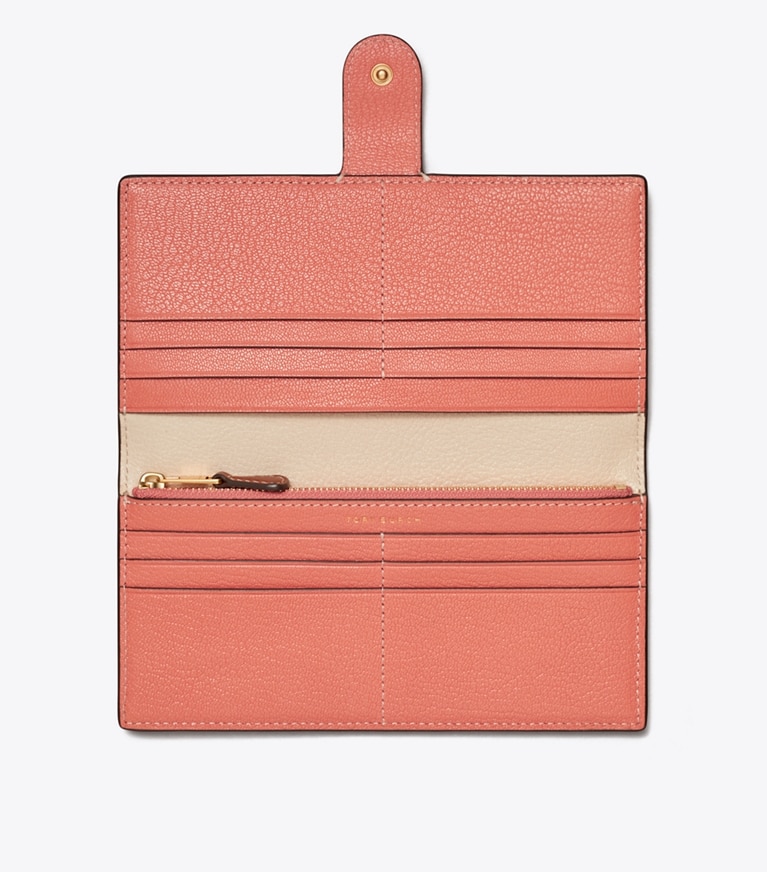
Accessories round out the picture: sunglasses, small leather items, and double-T motif jewelry offer a more accessible entry point for shoppers who want the brand’s aesthetic without spending three figures on a complete handbag. Card cases and wallets, often highlighted by customer feedback for opting for full-grain leather over bonded substitutes, hold up well over years of daily use.

Here is a side-by-side look at five signature categories to make clear where the brand’s strengths lie and what to expect from each.

Classification Iconic Item Best For Wear Insights
Warm-Weather Footwear Flat in Reva style with logo slide Regular rotation, trips Leather-backed soles maintain shape well across years
Tops Printed silk blouse Office, evening The silk fabric calls for gentle laundering but withstands fabric wear
Handbags Fleming-style shoulder bag Routine wear, formal styling The quilted texture displays use slower than smooth finishes
Jackets & Coats Tailored, structured blazer Professional wear, layering The tailored construction holds through repeated wear and professional cleaning
Closed-Toe Shoes Lug-sole loafer Cold weather, daily travel Rubber soles hold up longer than leather-bottomed versions

Strategic Purchasing: Sales, Outlets, and Timing

Since full-price Tory Burch represents a real investment, when and where you shop matters every bit as much as your product choices. A tory burch outlet location usually carries previous-season styles and outlet-exclusive designs built from slightly different materials, which is important to keep in mind if you’re anticipating an exact equivalent to the primary collection. Costs at these outlet stores run considerably lower, which makes them a sensible entry point for anyone new to the brand who wants to check sizing and craftsmanship before committing to full-price pieces.

A tory burch sale offered on the label’s official website or licensed retail partners is the other significant occasion. These promotional periods typically occur around end-of-season transitions — think the tail end of summer for resort wear and after the winter holidays for outerwear and boots. Signing up for email alerts is the most reliable way to grab price drops before inventory in your size disappears, since popular items like the Fleming bag and Reva flats get snapped up quickly even at discounted rates.

For shoppers building a list of what to prioritize, a loose top 10 tory burch selection might include: the Reva flat, the Fleming bag, a printed silk top, the Robinson tote, lug-sole loafers, a structured blazer, logo slide sandals, a sweater dress, small leather wallets, and statement sunglasses. This is not an official ranking, but it represents the pieces that reliably resurface in shopper favorites and media coverage year after year.

Closing Notes on Assembling a Tory Burch Closet Collection

The power of Tory Burch lies in its steady design philosophy: classic-preppy basics, surprising color choices, and a logo that customers have come to rely on rather than just identify. Looking at a Tory Burch review, whether from a fashion editor or a everyday customer, you’ll notice repeated praise for the same few standout traits — comfortable but polished shoes, tops that feel built to last, and bags built to be used daily rather than reserved for rare outings.

You don’t have to buy everything at once when building a wardrobe around the brand. Depending on your budget and the discount calendar, build out from one versatile piece such as structured sandals or a tailored top. The pieces outlined here represent the best entry points into a brand that has secured its standing in contemporary American style, whether you browse the main collection, chase outlet deals, or wait for a seasonal markdown.

Casablanca Clothing Bold Motion Style Refresh Alert

By blog No Comments

Why Careful Upkeep Is Important for Casablanca Clothing

Casablanca clothing is built with premium fabrics, complex prints and exacting craftsmanship that support its designer retail. In 2026, with the cost of a one silk shirt ranging from 700 to 1 200 dollars and knitwear from 450 to 900 dollars, caring for these garments with the same care as cheap basics is a quick route to wasted money. Thoughtful maintenance maintains the vibrancy of prints, the softness of fabrics and the structure of pieces, ensuring that each piece delivers service over many seasons rather than just a couple of months. Beyond defending your financial investment, careful care is an green choice: garments that endure longer generate less waste and lower the demand for substitute purchases. This guide delivers detailed, actionable advice for maintaining every primary fabric category in the Casablanca range—silk, cotton, knitwear, fleece and combination materials—along with preservation, mark management and mending strategies that will maximise the life of your wardrobe noticeably.

Washing Silk Shirts, Dresses and Scarves

Silk is the most fragile fabric in the Casablanca collection and calls for the closest attention. Invariably review the care tag first, as some silk pieces are tagged dry-clean only while others support soft hand-washing. For hand-washing, set up a basin with cold water no warmer than 30 degrees Celsius and add a blue casablanca shirt conservative amount of pH-neutral detergent purposely designed for silk or sensitive fabrics. Immerse the garment, carefully agitate for one to two minutes without scrubbing or twisting, then empty and rinse with clean cool water until all suds is eliminated. To dry, spread the piece flat on a absorbent towel, fold the towel to press out excess water and then move the garment to a drying rack in a airy area away from harsh sunlight and heaters. Never wring silk, as the material can damage permanently, and never suspend waterlogged silk, as the heaviness of the water can pull the fabric permanently. For removing wrinkles, use a compact steamer kept at a small separation from the fabric rather than pressing straight on with an iron, which can cause watermarks or heat marks on silk. If dry cleaning is more convenient, find a trusted cleaner familiar with silk and request that no forceful pressing should be applied.

Looking After Cotton T-shirts, Hoodies and Sweatpants

Cotton pieces—comprising T-shirts, hoodies, sweatpants and cotton shirts—are the easiest to care for items in the Casablanca collection but still benefit from careful handling. Put all cotton garments inside out before washing to shield surface prints, embroidery and the front of the fabric from friction with other items in the machine. Use a soft or fine cycle at 30 degrees Celsius with a soft wash detergent; do not use granular detergents that can build up build-up in fleece material. Do not overfill the washing machine—garments deserve freedom to tumble and rinse completely. Skip fabric softeners, which coat cotton material and gradually weaken the original plushness and breathability of fleece and terry cloth. For drying, line drying is consistently the safest option: lay thick items like hoodies flat or hang them on wide hangers to prevent shoulder stretching, and guarantee sufficient airflow to prevent musty odours. If you have to use a machine dryer, opt for the mildest heat setting and take out items while still a bit not fully dry to avoid excessive drying, which produces contraction and damages elastane in ankle bands and waistbands. Faithful care using these methods will preserve your cotton Casablanca pieces appearing crisp and structurally solid for years.

Casablanca Fabric Care Handy Reference

Material Wash Method Temperature How to Dry Key Notes
Silk Hand-wash / professional clean Max 30 °C Flat, no sun No wringing, steamer only
Cotton (heavyweight) Machine delicate cycle 30 °C Hang flat or hang Inside out, no softener
Cotton (thin) Machine delicate cycle 30 °C Air-dry or gentle tumble Remove promptly
Knitwear (wool) Hand-wash / gentle Max 30 °C Flat on rack Reform while damp
Knitwear (cotton) Machine in laundry bag 30 °C Flat on rack Use fabric shaver
Cotton terry Machine gentle cycle 30–40 °C Air-dry or gentle tumble No softener

Caring for Knitwear

Casablanca knitwear—ranging from light cotton sweaters to merino crewnecks and premium cardigans—calls for a equilibrium between cleanliness and restrained handling, because excessive washing hastens fabric damage and fuzzing. The most effective method is to hang out knitwear between wears, hanging it in a open space for a few hours to remove humidity and odours before storing. When washing is needed, manually launder in lukewarm water with a gentle detergent or use a machine’s delicate cycle inside a fine laundry bag. After washing, lightly push out water without stretching, rest the garment flat on a clean towel and reform it to its original shape while moist. Drying flat stops the stretching that results when dense wet knits are draped on hangers. Pilling is a common process with lightweight knitwear; using a fabric shaver or a cashmere comb periodically strips away pills and brings back a even surface. Store knitwear flat on shelf space rather than on hangers, as hanging can warp shoulders and pull the body over time. Cedar balls or lavender sachets in storage drawers can work to repel moths, which are attracted to animal fibres like wool and cashmere.

Keeping Recommendations

How you organise Casablanca clothing between wears and between cycles has a significant influence on its durability. Shirts, blazers and outerwear should hang on shaped or broad wooden hangers that support the shoulders without creating indentations. Avoid wire hangers, which can leave dents and warp shape. Substantial knitwear and sweatpants should be folded and kept on shelves or in drawers, with denser items on the bottom to avoid compression of more delicate pieces above. For seasonal storage—such as storing winter items during summer—use breathable cotton protectors rather than vinyl covers, which trap condensation and can lead to yellowing or mould. Store garments in a climate-controlled, dry space with stable temperature; stay away from attics, basements and garages where heat and moisture levels change. Sunlight is one of the greatest risks of colour: even diffused light over sustained periods can wash out rich prints and dyes, so position put-away clothing away from windows. Periodically inspect stored items for evidence of moth damage or mildew, and resolve any findings right away. These keeping habits are especially critical for patterned silk pieces, whose saturated colours are the most susceptible to environmental degradation.

Spot Management and Fixes

Blemishes are an natural part of wearing clothes in the real world, and immediate action is the best weapon. For fluid spills on any Casablanca fabric, press immediately with a dry, unused cloth or paper towel—never rub, as this drives the stain further and can extend it. For water-soluble stains like wine, coffee or food, press lightly with a cloth soaked in lukewarm water and a small amount of gentle soap, starting at the edge of the stain inward to stop spreading. For fat-based stains, apply a modest amount of absorbent powder or talcum powder on the mark, leave it work for 15 minutes, then wipe away carefully and treat with a soft detergent. Invariably check any cleaning product on an discreet area of the garment first to check for colour change or textile damage. For set-in or significant stains on silk, bring the garment to a professional cleaner as soon as possible rather than risking amateur techniques that may produce lasting damage. Small repairs—loose buttons, small seam gaps, caught threads—can be addressed at home with rudimentary mending skills or taken to a tailor. Handling these problems quickly prevents them from escalating during following wears and washes. With mindful stain management and quick repairs, Casablanca clothing can keep in excellent shape through several years of pleasure. For the brand’s own care recommendations, review the product pages on casablancaparis.com and broader fabric care guides on The Spruce.

Modern Dubai Design Praised For Kitchen Work

By blog No Comments

Dubai Interior Design Styles and the Firms That Own Them

Dubai’s design market is unusually pluralistic, and in 2026 you can find nearly any aesthetic delivered to a very high standard. The very city that builds palace-scale classical villas also turns out some of the region’s most pared-back minimalist apartments. Choosing a style is really about choosing a firm whose instincts align with your taste, because studios usually specialise. This guide lays out the major looks driving Dubai homes and venues to the firms best known for them. It is grounded in current market direction, including the quiet-luxury and biophilic themes that define 2026. Throughout, it notes rough budget bands so you can align ambition with cost. Use it to trim a long list into a shortlist of two or three suitable partners. It also points out where 2026 trends such as smart-home systems fit in.

Classical and neo-classical splendour

Classical and neo-classical interiors stay a signature Dubai look, especially for sizeable villas and penthouses. Luxury Antonovich Design, part of the Antonovich Group, is firmly linked to ornate palace-scale residences delivered turnkey from Downtown Dubai. Its work combines classical and richly detailed contemporary designs with complete design-and-build execution. ALGEDRA Interior Design also covers luxury interiors and architecture in both classical and contemporary styles across residential and hospitality work. CK Architecture Interiors fills out this group with end-to-end luxury home work run by in-house design and execution teams. These studios suit clients who want symmetry, statement materials and true grandeur. Luxury villas in this register usually land in the AED 600,000 to AED 2 million-plus band, with ultra-prime homes on Palm Jumeirah or Emirates Hills higher still (market estimates).

Quiet luxury and low-key elegance

Quiet luxury, or understated elegance, is arguably the signature residential mood of 2026. The look leans on calm palettes, exceptional materials and craftsmanship felt rather than seen. Sneha Divias Atelier is a boutique studio blending interiors and architecture known for clean, detail-driven spaces that suit this brief well. Its pared-back approach prizes proportion and quality over ornament. XBD Collective, a practice working between Dubai and London, brings a similarly refined, international sensibility to high-end residential interiors. Zen Interiors, a turnkey, bespoke studio founded in 2003, also produces polished residential schemes for apartments, villas https://bestinteriordubai.com/best-luxury-interior-design/ and penthouses alike. For buyers who equate luxury with discretion, these names are a sensible starting point.

Minimalism and warm minimalism

Minimalism in Dubai has grown warmer, trading stark white boxes for natural, tactile materials. VSHD Design is a leading name in this space, with a minimalist, space-driven practice based in JLT Dubai. The studio operates across high-end residential, apartments, hospitality and retail, always with a strong sense of space and light. Warm minimalism retains the discipline of clean lines but adds timber, stone and soft textiles for comfort. Muse Design contributes a modern, contemporary home voice with a villa-heavy portfolio that feels clean and current. This aesthetic suits apartments particularly well where clarity and flow are paramount. It also ages gracefully, which suits owners who plan to stay for years rather than months.

Biophilic design, wellness and sustainability

Biophilic design, wellness and green building form one of the strongest currents running through 2026. The approach carries nature inside through planting, daylight, natural materials and improved air quality. Summertown Interiors is a natural point of reference, noted for sustainability and LEED-certified, healthier offices. Its focus on eco-materials sits alongside the UAE Net Zero 2050 goal and Dubai Municipality’s 2026 fit-out guidelines. Roar, based in Dubai Design District (d3), regularly threads wellness and research-led thinking into its concept-driven interiors. Together they show how green principles now shape workplaces and hospitality just as much as homes. You can learn more about the direction of travel in this Design Middle East feature on 2026 biophilic trends.

Bold, brand-led modern design

Not every client wants calm; some want a space that announces itself with confidence. Bold, brand-led contemporary design is where character, colour and bold detailing lead. Bishop Design by Paul Bishop, founded in 2004, is the go-to for expressive, branded hospitality and commercial interiors. Its work turns restaurants and lounges into memorable, highly photographed destinations. Roar features here too, drawing on strong concepts to give venues a clear point of view. For residences, Muse Design can take a contemporary scheme somewhere more expressive when a client is after drama. This register works for F&B operators and homeowners who treat interiors as a statement rather than a backdrop.

Smart, flexible and future-proof interiors

A quieter yet fast-growing 2026 theme is the smart, flexible and future-ready interior. Smart-home and smart-MEP systems now governs lighting, climate, security and entertainment in premium projects. Adaptable, multifunctional layouts let a single room serve as office, gym or guest space as needs shift. Swiss Bureau Interior Design, a design-and-build studio founded in 2003, is well versed in technology-led corporate and residential work. 4SPACE Design brings a multidisciplinary, bespoke approach that adapts easily to hybrid living and working. This direction fits owners who want their space to evolve with them rather than going out of date fast. It dovetails with the warm-minimalist and sustainable themes running through the year.

Quick reference: style to firm

The table below distils these styles into a quick reference for shortlisting. Each row matches a look to representative Dubai studios and the settings where it tends to shine. Treat the firm names as strong examples rather than the sole options, since many studios move across styles. The pairings mirror each firm’s public positioning and core specialty. Consider them next to your own budget band and the sort of property you are fitting out. From there, a shortlist of two or three compatible studios follows naturally.

Style Representative Dubai practices Best suited to
Classical and neo-classical Luxury Antonovich Design, ALGEDRA Interior Design, CK Architecture Interiors Big villas and penthouses
Understated luxury Sneha Divias Atelier, XBD Collective, Zen Interiors Premium apartments and villas
Warm-toned minimalism VSHD Design, Muse Design Apartments and modern villas
Biophilic and sustainable Summertown Interiors, Roar Offices, wellness-led spaces
Bold, brand-led Bishop Design by Paul Bishop, Roar Dining, retail and statement homes
Smart and flexible Swiss Bureau Interior Design, 4SPACE Design Adaptable homes and offices

Matching style to your space and budget

Matching a style to your space and budget keeps a project realistic from day one. As a broad guide for 2026, mid-tier residential fit-out is often estimated around AED 200 to AED 400 per square foot, with luxury villas reaching AED 600 to AED 2,000-plus (market ranges). A two-bedroom apartment of roughly 1,100 to 1,500 square feet might fall between AED 400,000 and AED 750,000 at mid level. Fees for design alone typically sit near 10 to 20 percent of the budget, or AED 175 to AED 550 per square foot. Heavier styles such as ornate classical work tend to cost more because of bespoke joinery and rich materials. Pared-back minimalism is not automatically cheaper, since fewer elements must each be flawless. Set your budget band first, then choose a style and studio that comfortably fit inside it.

Converting style into a shortlist

Style in Dubai is less about chasing a single trend and more a matter of honest self-knowledge. Settle on whether you want grandeur, calm, nature or drama, and the fitting studios quickly stand out. The firms named here each own their territory, which makes them dependable starting points. Always confirm current specialisation directly, as studios evolve and expand their range over time. Compare a few portfolios against the table above before committing to anyone. With style and studio aligned, the rest of the project usually runs much more smoothly. Trends will keep shifting, but a firm that owns its craft lasts.